“This wasn’t how things were supposed to turn out, we’d meant to be having a laugh,” and we see our character’s (Jayden Yusuf) features and surroundings: he’s in a police interviewing room, he’s clothes are shredded and covered in mud, he has a gash to his cheek, and his curly hair is saturated / soaked in blood. There is also screaming and a heartbeat as non-diegetic, incidental audio. Cut to (high angle / eagle-eye shot - camera is grainy / poor quality, symbolising CCTV at a police station) our protagonist, there is little / no audio as we are emphasising to the audience that the protagonist is on his own. Audience hears screams even though we see that the protagonist is alone (establishing shot - colour is now present, quality is good - we have incidental audio getting louder; we also see cuts of POV shots from the protagonist viewpoint, we see a view of his feet running, brief look over his shoulder, the audience also hear heavy breathing as non-diegetic sound). The incidental audio - screams and heartbeat - grows louder and louder until the protagonist screams “ENOUGH!!” - in a slightly higher / deeper voice - and he slams his fist against the table.
Friday, 17 February 2017

Friday, 10 February 2017
Music Analysis
Sound
Isn't it funny how a piece of music can become synonymous with a film, or TV show? Sound is something that is seen as a minor part of film. Other factors such as camera angle, image quality, script are frequently prioritised over sound. Music is a narrative device that helps explain, and may also give further context to, the plot and it is an essential part of a film and can even enhance an audience’s experience. For example the music above (Doctor Who) is synonymous with the show, regardless of whether we see the T.A.R.D.I.S or the Doctor.
There are multiple classification types for sound in film:
There are multiple classification types for sound in film:
- Parallel Sound: sound that compliments, and goes along with the story that is unfolding on the scene, to may also add extra atmosphere to the scene
- Contrapuntal Sound: sound that contrasts with what is being on screen, it is used for comical purposes, and it may also be used to make light of what is going on in the scene
Friday, 3 February 2017
Props & Equipment
Props:
Tables
ChairsAdidas ZNE Hoodie
Fake Blood - red food colouring, corn flour, and water
Police badge
Equipment:
Canon
100 etc.
TripodLights (lights used for back light etc.)
Tuesday, 6 December 2016
Lighting Analysis
Lighting
When it comes to
lighting, the smallest detail can change how the audience interpret the media
text. As a result, lighting is set into the 3 major categories that define how
the lighting is and what effect this has on the reader:
 -
Low key Lighting:
is created by using only back lights, it is usually used to hide parts of the
scene that may give spoilers to what’s about to occur - as a result, this type
of lighting is usually used to raise tension in films. However, it can also be used to
-
Low key Lighting:
is created by using only back lights, it is usually used to hide parts of the
scene that may give spoilers to what’s about to occur - as a result, this type
of lighting is usually used to raise tension in films. However, it can also be used to -
High Key Lighting:
uses filler lights to create a brighter scene, it’s often used in the between
tense scenes, this type of lighting is quite calming and therefore lowers
tension, in order to raise it again in later scenes. Furthermore, a lack of vision in the background, creates a sense of mystery and further.
-
High Key Lighting:
uses filler lights to create a brighter scene, it’s often used in the between
tense scenes, this type of lighting is quite calming and therefore lowers
tension, in order to raise it again in later scenes. Furthermore, a lack of vision in the background, creates a sense of mystery and further.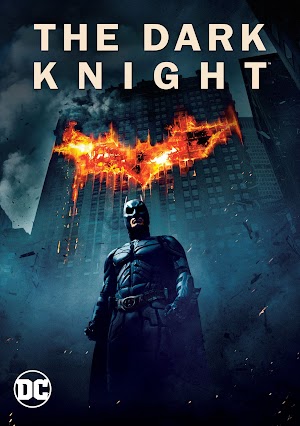
- Contrast: is the balance of light and dark, and can be created by the use, or lack of, high-key lighting and low-key lighting, it is often used to add atmosphere and can (on occasion) conceal elements of a scene for them to be later revealed (in this sense, contrast is similar to low-key lighting). as seen in the image, there is a bright bat emblem, above a dark figure (which we know to Batman) which draws attention to the Batman.
Also, here's a little extra, something I found about lighting, and how it works
Tuesday, 29 November 2016
Location Analysis
I'm
back guys. Today's just a rough overview of what locations we have, what
they need, and a few pictures of one of our settings.
(SETTING NO.1 - Office)
·
spacious
·
well-lit / fully controllable lighting
·
table
(SETTING 2 NO.2 - Forest)
·
dark / obscure lighting (can be controlled in the
edit)
·
narrow paths
·
clearings
·
plant life
However, site number 2 is harder. Located near Harris City Academy Crystal Palace, the forest-like area is open to the elements, meaning that - due to English weather - the ground is sometimes too muddy/slippery to film. Furthermore, the lighting is also difficult, as in Britain, currently we're in winter so it's darker at earlier times in the day, however, we need some of this darkness to get

This
is an example of our forest scene. Furthermore, you can see some of the
practical elements that help with film's ambience. The lighting - slanted, and
half lit - will allow some aspects of the opening to remain hidden, especially
due to the fact, this part of the scene will feature the killer (who remains
anonymous), as
well as the plant life, which gives the impression of an imposing presence.
Tuesday, 22 November 2016
Treatment: In-depth
Hey guys, what
you’re about to read is a treatment: a piece of text that provides a
step-by-step layout of a film. So here’s my film treatment; camera angles,
directions and script included, I hope you enjoy it as much as I did writing it
cos I truly put in WORK on this.
But before we begin I’ve gotta put a disclaimer out there - WARNING: Some of the stuff you may see may not actually be in my later film.
ENJOY!
Film Treatment
Black background, institution - KMA PRODUCTIONS - appears in bold lettering in Silver with a golden outline. The logo then fades out into a protagonist’s eyes (very close up shot). As the camera pans, we hear our character’s voice “This wasn’t how things were supposed to turn out, we’d meant to be having a laugh,” and we see our character’s (Jayden Yusuf) features and surroundings: he’s in a police interviewing room, he’s clothes are shredded and covered in mud, he has a gash to his cheek, and his curly hair is saturated / soaked in blood. There is also screaming and a heartbeat as non-diegetic, incidental audio. Cut to (high angle / eagle-eye shot - camera is grainy / poor quality, symbolising CCTV at a police station) our protagonist, there is little / no audio as we are emphasising to the audience that the protagonist is on his own. Audience hears screams even though we see that the protagonist is alone (establishing shot - colour is now present, quality is good - we have incidental audio getting louder; we also see cuts of POV shots from the protagonist viewpoint, we see a view of his feet running, brief look over his shoulder, the audience also hear heavy breathing as non-diegetic sound). The incidental audio - screams and heartbeat - grows louder and louder until the protagonist screams “ENOUGH!!” - in a slightly higher / deeper voice - and he slams his fist against the table
At that moment, a police detective - DI Walker - enters… (Continue from script)
And that's a movie treatment guys. Same time next week right? :)
But before we begin I’ve gotta put a disclaimer out there - WARNING: Some of the stuff you may see may not actually be in my later film.
ENJOY!
Film Treatment
Black background, institution - KMA PRODUCTIONS - appears in bold lettering in Silver with a golden outline. The logo then fades out into a protagonist’s eyes (very close up shot). As the camera pans, we hear our character’s voice “This wasn’t how things were supposed to turn out, we’d meant to be having a laugh,” and we see our character’s (Jayden Yusuf) features and surroundings: he’s in a police interviewing room, he’s clothes are shredded and covered in mud, he has a gash to his cheek, and his curly hair is saturated / soaked in blood. There is also screaming and a heartbeat as non-diegetic, incidental audio. Cut to (high angle / eagle-eye shot - camera is grainy / poor quality, symbolising CCTV at a police station) our protagonist, there is little / no audio as we are emphasising to the audience that the protagonist is on his own. Audience hears screams even though we see that the protagonist is alone (establishing shot - colour is now present, quality is good - we have incidental audio getting louder; we also see cuts of POV shots from the protagonist viewpoint, we see a view of his feet running, brief look over his shoulder, the audience also hear heavy breathing as non-diegetic sound). The incidental audio - screams and heartbeat - grows louder and louder until the protagonist screams “ENOUGH!!” - in a slightly higher / deeper voice - and he slams his fist against the table
At that moment, a police detective - DI Walker - enters… (Continue from script)
And that's a movie treatment guys. Same time next week right? :)
#1T4TS
AlexFriday, 18 November 2016
Se7en 1 Minute Reshoot vs. The Original Se7en Opening Scene
Original Se7en Opening Scene
When we first looked at Se7en, I wasn't quite sure about it. The opening scene doesn't reveal much about the film, and there a several simplistic techniques used. The use of Over-The-Shoulder (OTS) and Point Of View (POV) shots give the audience a sense of presence - they feel as if this is happening to them whilst raising questions about what's going on.
Anyway, there's not really much I can do but say enjoy, and if you have any feedback, leave it in the comments.
Anyway, there's not really much I can do but say enjoy, and if you have any feedback, leave it in the comments.
Se7en 1 Minute Reshoot
I can’t say much about this, after all, especially since I helped make it, but I’d like to say we did well. The use of light and camera angles helped create a disorientated, slightly sinister atmosphere to the scene. We also used. Using the scene's original soundtrack, we (myself, Khaleem, Mateusz, and Tariq) were able to create a similar (if not better) opening scene.
And that's all for this week, see you at the same time same place in a week.
#1T4TS
Alex
Subscribe to:
Posts (Atom)